Baltic hub boosts rail capacity with
two new rail mounted gantry cranes

Baltic Hub, the largest container terminal in the Baltic Sea, has taken another step in strengthening its intermodal capabilities with two new electric rail mounted gantry cranes (RMG) which were recently delivered. The enhanced equipment fleet will play a critical role in advancing operational excellence by enabling more efficient container handling by rail. Once operational, the handling capacity of the Baltic Hub rail siding will increase to 1.2 million Twenty-foot Equivalent Units (TEUs) per year.
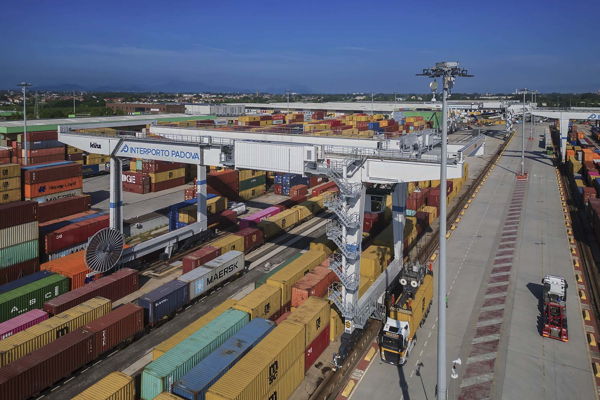
The new RMG cranes will be the fifth and sixth pieces of handling equipment operating in the terminal’s rail yard, which consists of seven tracks with a total length of 5.25 km (750m each). Both new RMG cranes will be equipped with an advanced Optical Character Recognition (OCR) system for automatic container number identification, an anti-collision system for the gantry crane, and 11 cameras to support operators during operations. In addition, as with all cranes in the terminal, innovative solutions will be implemented to increase operational efficiency, such as micro-movements of the spreader for precise positioning and emergency winch brakes for enhanced work safety. The steel structure of the RMG cranes was largely manufactured in Poland and the assembly itself has been carried out on site..
"In line with PSA’s Node to Network strategy, Baltic Hub consistently invests in advanced technological solutions and expands its operational facilities to strengthen nodal excellence, increase flexibility and adapt to evolving market requirements. The deployment of two additional RMG cranes is another step towards this goal and expresses our support for the development of sustainable intermodal transport. The RMG cranes will play a key role in increasing the handling capacity of the rail siding to 1.2 million TEUs per year. Each of these investments strengthens Baltic Hub's position as a key logistics hub in Central and Eastern Europe”, says Jan van Mossevelde, CEO of Baltic Hub.
Baltic Hub has been consistently developing its rail infrastructure, currently handling almost 800 trains per month, ensuring efficient transport of goods in Poland and throughout Central and Eastern Europe, including the Czech Republic, Slovakia, Hungary, and Ukraine. The use of modern, fully electrified RMG cranes not only increases operational efficiency but also significantly reduces carbon emissions, contributing to the achievement of sustainable development goals.


About Baltic Hub
Baltic Hub Container Terminal Sp. z o.o. is Poland's largest and fastest-growing container terminal. It connects Asia, the European Union with Poland and the emerging markets of Central and Eastern Europe and the entire Baltic Sea. Baltic Hub receives the largest ships in the world departing from the Far East.
The terminal handles Polish imports, exports and transshipment cargo. Baltic Hub is a natural gateway for Poland and Central and Eastern Europe, with excellent land connections to countries such as the Czech Republic, Slovakia, Ukraine, Hungary and Germany. In 2025, Baltic Hub handled 2.7 million TEU. It currently employs more than 1,500 people.
The terminal is owned by PSA International (PSA) (40%), the Polish Development Fund (PFR) (30%) and the IFM Global Infrastructure Fund (30%). PSA is a leading global port group and a trusted partner to cargo stakeholders. Headquartered in Singapore, PSA's portfolio spans 45 countries and includes an integrated network of deepsea, rail and inland terminals, marine services providers, supply chain nodes, and digital platforms. PFR is a commercial law company owned by the State Treasury, which invests in projects of strategic importance while maintaining a market rate of return. By 2025, PFR had invested PLN 15 billion directly in Polish companies. IFM Global Infrastructure is a global institutional fund management company.
Media contact
Magdalena Jagla
Reinout Moens
Caroline Creve